Artificial Intelligence (AI) has revolutionized businesses, streamlining and optimizing operations while increasing efficiency and productivity. However, companies often face challenges in the implementation and management of AI; this could either be a failure to identify the appropriate use cases for AI or guaranteed functionality and efficiency.
AI adoption calls for a comprehensive understanding of its lifecycle, and companies need to make sure they focus on three critical areas – Silicon, Software, and Services.
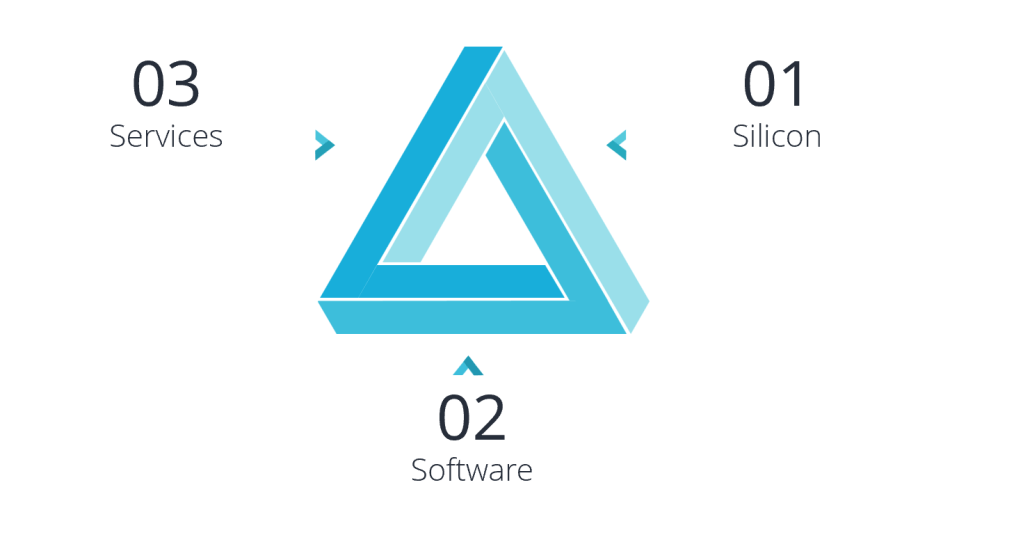
In this blog post, we’ll delve into these areas, their importance, and their relevance in the AI Lifecycle.
Silicon: Silicon-based chips, are a foundational material in modern AI infrastructure. It comprises traditional components such as the central processing unit (CPU), the graphics processing unit (GPU), memory, network, and data storage. A scalable and resilient AI infrastructure creates a solid foundation for enterprise deployment, capable of supporting complex algorithms, data storage, and analysis. A robust infrastructure facilitates the acceleration of the AI process, enabling businesses to handle large amounts of data and process information in real-time. Therefore, reliable modern infrastructure components are essential for AI success.

The use of modern AI infrastructure also allows for optimal performance. Modern silicon-based processors are specifically designed for tasks such as machine learning and intensive data processing. They offer high computational power, increased energy efficiency, and real-time parallelism capabilities. This combination of performance and efficiency ensures the smooth operation of AI applications, providing users with fast and accurate results.
Furthermore, it plays a crucial role in the data storage and transmission of data required for AI. Modern data infrastructure enables quick access to large data sets making sure processing cycles are not wasted. Additionally, modern networking facilitates fast and reliable data transfer between different components of the AI infrastructure.
Silicon is the essential element of modern AI infrastructure. With its high performance, energy efficiency, and data storage and transmission capabilities, silicon enables businesses to successfully deploy advanced AI solutions.
Software: The software layer is equally as important as the hardware layer and is a critical component of the overall AI ecosystem. The software layer encompasses a wide range of AI algorithms that support the general AI infrastructure to achieve business outcomes.
These AI ecosystem can vary from simple “no-code” tools that allow users to manage AI operations and pipelines, to “Super User” tools that assist users in building and operating flexible and precise AI models. These tools are vital in identifying the necessary AI use cases and implementing optimal solutions. In your AI journey, there must be a recognition of different types of software to streamline AI operations, manage costs, and ensure maximum efficiency. By understanding the software layer of AI, businesses can establish a solid foundation to harness the full potential of this groundbreaking technology.
AI software ecosystem is dynamic and evolving rapidly. Below is the AI software market glance from IDC’s point of view.

Services: Services play a critical role in the AI ecosystem. The tools and software utilized in the AI lifecycle are still new and evolving, which is why services are crucial to ensuring smooth integration and efficient operation. Services have so far been ignored by most businesses, but as AI operations become more complex, businesses need to incorporate them into their operations to avoid operational challenges. The services layer includes workforce preparedness to scale and support AI operations, operationalizing data management and analytics workloads, and delivering workload automation.
Understanding the AI lifecycle is critical for implementing and maintaining AI solutions successfully; companies should prioritize and focus on the Silicon, Software, and Services layers. It is crucial to have a reliable infrastructure regardless of the hardware used and to implement software tools that correlate with the AI problems faced to ensure smooth operations. Finally, businesses must recognize the pivotal role played by the services layer and adequately plan for its integration into their AI ecosystem.
In summary, businesses that identify the appropriate use cases for AI and implement optimal solutions will reap numerous benefits and gain a competitive edge in today’s fast-paced technological environment. Here are my 3 suggestions to increase changes in your AI pilot
- Incorporate Real-World Business Use Case
- Develop a Technology Infrastructure and Integrate AI as a tenant
- Bring AI to your data
Categories: DellEMC

 {{ vExpose }}.Blog