Over the past two decades, enterprise IT architecture has undergone a dramatic transformation. What began as siloed, three-tier environments has evolved through converged and hyper-converged infrastructure (HCI) to today’s cutting-edge disaggregated platforms. This journey is more than a story of hardware innovation-it’s the foundation for the next era of data-driven business, especially as generative AI (GenAI) workloads reshape the technology landscape.
From Three-Tier to Hyper-Converged: The Drive for Simplicity
Three-tier architecture-with separate compute, storage, and networking-offered flexibility, but at the cost of complexity and inefficiency. IT teams often faced overprovisioning, stranded resources, and operational headaches.
The arrival of converged infrastructure bundled these elements into pre-validated stacks, simplifying procurement and deployment. Yet, the fundamental silos remained, limiting agility and resource utilization.
Hyper-converged infrastructure (HCI) took consolidation further by merging compute and storage into modular nodes managed by software. According to Fortune Business Insights, the global HCI market is projected to reach $65 billion by 2029, reflecting enterprises’ desire for simplified management and scalability. However, HCI’s tightly coupled design makes it difficult to scale compute and storage independently-a critical limitation for today’s AI and data-intensive workloads.
The Rise of Disaggregated Platforms: Built for GenAI
Enter disaggregated infrastructure: an architecture that decouples compute, storage, and networking into independent resource pools. This approach is rapidly gaining traction, with the composable/disaggregated infrastructure market expected to triple to over $19 billion by 2029 (MarketsandMarkets).
Why Disaggregation Matters-Especially for GenAI
Independent Scaling GenAI workloads are unpredictable and data-hungry. Disaggregated platforms allow organizations to scale storage for massive datasets or add GPU-rich compute nodes as needed-without unnecessary overprovisioning.
Superior Resource UtilizationDell reports that disaggregated architectures can deliver “orders of magnitude higher” core utilization and reduce server and software licensing costs by up to 50%.
Performance for AI Technologies like NVMe-over-Fabrics and CXL memory pooling enable low-latency, high-throughput access to data-keeping GPUs saturated and AI pipelines moving at full speed.
Hybrid and Edge Flexibility Disaggregated storage and compute pools can be orchestrated across on-premises, cloud, and edge environments, supporting the distributed nature of modern AI applications.
Many vendors/startups are rapidly evolving their portfolio to embrace disaggregation, making it the new default for enterprises scaling GenAI and other advanced workloads.
Edge AI is now viable, with lightweight models running inference on disaggregated clusters far from the data center.
The shift to disaggregated infrastructure is not just a technological trend-it’s a strategic imperative for organizations embracing GenAI and next-generation workloads. By enabling independent scaling, maximizing resource efficiency, and supporting hybrid deployment models, disaggregated platforms are redefining what’s possible in the data center.
In the age of AI, flexibility is the ultimate competitive advantage. Is your infrastructure ready?
Let’s connect and discuss how your organization can leverage disaggregated architectures to accelerate GenAI and future-proof your digital transformation.
Enterprise search has long been the backbone of organizational knowledge discovery, enabling employees to sift through vast troves of internal data-emails, documents, reports, and more. Yet, as information volume and complexity have exploded, traditional search systems have struggled to keep pace. Enter Generative AI (GenAI): a transformative technology that promises not just incremental improvements, but a fundamental reimagining of how enterprises access and leverage information.
The Traditional Enterprise Search Challenge
Legacy enterprise search platforms typically rely on keyword-matching and index-based algorithms. While effective for straightforward queries, these systems falter when faced with:
Ambiguous or complex natural language queries
Unstructured or poorly tagged data
Industry-specific jargon and synonyms
The need for contextual, role-based, or personalized results
Multi-language demands and adaptive access controls
The result? Knowledge workers spend an estimated 2.5 to 3.6 hours per day searching for information, leading to frustration and lost productivity.
How GenAI Transforms Enterprise Search
GenAI, powered by large language models (LLMs) and advanced natural language processing (NLP), addresses these pain points in several critical ways:
1. Deep Contextual Understanding and Intent Detection
Unlike traditional search, GenAI interprets the context and underlying intent behind user queries. Whether an employee asks, “How do I reset my password?” or “I forgot my password, can you help?”-GenAI recognizes the shared intent and delivers precise, relevant answers. This semantic understanding extends to complex, multi-step, or follow-up queries, enabling conversational and intuitive information retrieval.
2. Personalization and Adaptive Learning
GenAI-powered search systems learn from user profiles, search histories, and real-time interactions, tailoring results to individual roles and preferences. Over time, this leads to hyper-personalized experiences, with the system anticipating user needs and improving with every interaction.
3. Mastery of Unstructured and Multilingual Data
GenAI excels at parsing unstructured data-emails, PDFs, images-transforming them into structured, searchable formats. It also supports multilingual and cross-domain queries, making it invaluable for global enterprises with diverse data sources.
4. Automation and Decision Support
Beyond search, GenAI can automate clerical tasks-summarizing documents, drafting emails, compiling reports-freeing employees to focus on higher-value work. It can synthesize insights across multiple sources, supporting faster and more informed decision-making.
5. Enhanced Security and Compliance
Modern GenAI enterprise search solutions integrate robust access controls and compliance features, ensuring sensitive information is only accessible to authorized users. AI can also detect anomalies and potential security threats by analyzing usage patterns.
Real-World Impact
Leading organizations are already leveraging GenAI to revolutionize internal knowledge centers, streamline customer service, and optimize business processes. The result is a measurable boost in productivity, faster decision cycles, and significant cost savings.
Challenges and Considerations
Despite its promise, GenAI is not a panacea. Key challenges include:
Data Quality and Integration: Success depends on clean, well-organized data and seamless integration with existing systems.
Hallucination Risk: LLMs may generate plausible but incorrect answers if not properly constrained by retrieval-augmented generation (RAG) or domain-specific fine-tuning.
Security and Governance: Ensuring robust access controls and preventing prompt-based security bypasses remain ongoing concerns.
Infrastructure Readiness: Many enterprises lack the foundational data infrastructure and skilled workforce needed for successful GenAI deployment.
Is GenAI a Replacement or an Evolution?
While GenAI dramatically elevates enterprise search, it is best viewed not as a wholesale replacement, but as an evolutionary leap. GenAI augments and, in many cases, supersedes traditional search by delivering context-aware, conversational, and highly relevant results. However, its success hinges on thoughtful implementation, robust data governance, and continuous improvement.
“GenAI is no magic bullet, but applied in the right places it has potential to improve enterprise search… As the technology evolves, its ability to further enhance search capabilities will grow, offering even more refined solutions to complex search challenges.”
The Future: From Search to Knowledge Discovery
As GenAI matures, the line between search and intelligent knowledge discovery will blur. Enterprises that invest in GenAI-powered search today are not just making information easier to find-they are laying the groundwork for a future where knowledge is proactively surfaced, synthesized, and delivered in context, driving innovation and competitive advantage.
In summary: GenAI is not just a better search engine-it is the catalyst for a new era of enterprise intelligence. For organizations ready to embrace this shift, the rewards are substantial: more empowered employees, faster insights, and a culture of data-driven excellence.
In the ever-evolving landscape of artificial intelligence, the incorporation of domain-specific knowledge into language models (LLMs) is not just a lofty goal—it’s a mission-critical aspect of model performance. This is where fine-tuning and Retriever-Reader (RAG) come into the picture, two powerful approaches with distinct methodologies for imbuing models with domain-specific prowess. As the Director of AI Research at a tech startup, investing in the right approach to empower language models with knowledge is a debate that rages on in our weekly strategy meetings. In this piece, I dissect the benefits and trade-offs of both methods, aiming to help data scientists, AI enthusiasts, and tech professionals make informed decisions regarding the enhancement of LLMs.
Introduction
The modern data scientist wields the power to curate a model’s understanding to an unprecedented degree. Incorporating domain knowledge has become less of an afterthought and more of the central piece to the puzzle of AI applications. As established models like GPT-3 demonstrate extraordinary capabilities, the question of specialized knowledge arises. Both fine-tuning and RAG have stepped forward as capable candidates for augmenting language models, offering different paths to the same destination.
Fine-tuning: Leveraging Existing Models
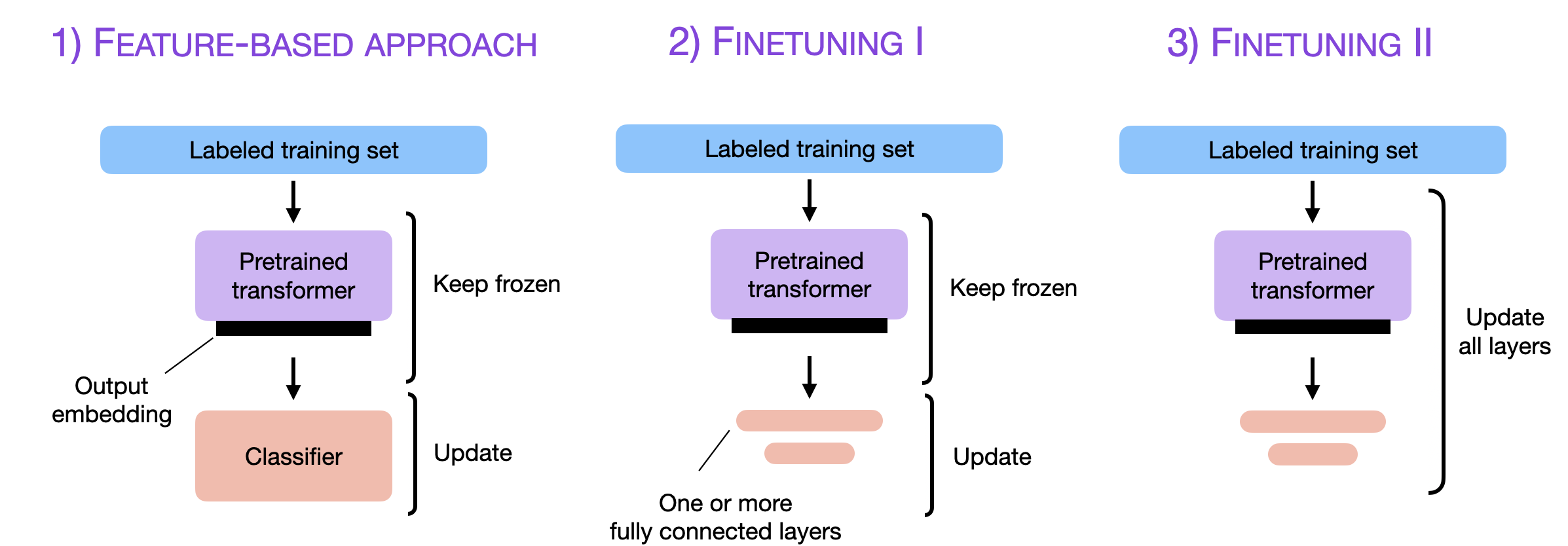
Fine-tuning involves starting with a pre-trained model and updating its weights using labeled examples from within the target domain. The rationale is simple: rather than reinventing the wheel, one can build upon the wealth of knowledge already stored within established models.
Fine-tuning has gained popularity due to its relatively lower resource consumption compared to training from scratch. Pre-trained models come with an inherent understanding of language and are adept at various natural language processing (NLP) tasks. By fine-tuning these models, often with a smaller, domain-specific dataset, we can specialize the general model to fit particular needs.
Benefits of Fine-tuning
Faster Deployment: Leveraging an existing model allows for a quicker setup, reducing the time from development to deployment significantly.
Capitalizing on Pre-trained Weights: The pre-training phase is costly in terms of computation and time. Fine-tuning capitalizes on this investment, using pre-trained weights as a head start for domain tasks.
Leveraging Pre-Trained Models: Pre-trained models are increasingly sophisticated and capture various nuances of human language.
Examples of Successful Applications
The medical field, for instance, has seen strides with fine-tuned models specializing in entity recognition, question answering, and summarization tasks. In patient data analysis, these models can parse through vast amounts of unstructured text, extracting relevant information with precision.
RAG: Incorporating Explicit Knowledge
RAG, on the other hand, is a more recently introduced framework designed to incorporate external knowledge sources into the inference process. It aims to enhance the rationality and awareness of AI systems by allowing them to query reference materials as part of their preliminary thinking.
The RAG Framework in Depth
The RAG framework consists of two components: a retriever and a reader. The retriever uses a query to extract relevant passages from a knowledge source, and the reader processes these passages to find an answer or provide context.
Handling Out-of-Domain Queries: RAG is capable of tackling a broader set of tasks, not just those within the dataset scope, by referring to the internet or other massive knowledge bases.
Interpretability: The retriever component offers insights into the knowledge basis of the model’s decisions, essential for accountability and trust in AI systems.
Real-World Use Cases
In legal research, for example, RAG models can sift through laws, cases, and precedents to provide up-to-date advice, cross-referencing information as legal landscapes shift. As such, the legal domain provides a fertile ground for RAG models to shine, reshaping how we approach legal queries and research.
Strengths and Weaknesses of Fine-tuning
Fine-tuning isn’t without its downsides. While it excels in many facets, particularly speed and leveraging existing models, it does come with concerns over model performance in unique domains.
Discussion of the Strengths
Fine-tuned models often achieve better performance on in-domain tasks, as they’ve been trained to recognize and respond to specific patterns and language nuances within the domain.
Analysis of the Weaknesses
Fine-tuned models can be sensitive to the distribution and quality of the training data. Overfitting, a common problem, may occur, leading to less generalizable models. Moreover, fine-tuning can inadvertently strip away some of the broader knowledge captured in the pre-training phase.
Strengths and Weaknesses of RAG
RAG’s ability to query large knowledge bases is a distinct advantage but not without its own set of challenges.
Examination of the Strengths
RAG models offer improved interpretability, particularly through the retriever’s explicit referencing of the source of its decisions. They also enjoy the benefit of not being overly specialized to a specific domain, serving as a more flexible solution.
Analysis of the Weaknesses
However, RAG’s computational requirements are significant. Each query necessitates running through a retrieval system, which can be a bottleneck in terms of the model’s scalability. There’s also the potential for errors in retrieving and parsing large external datasets.
Trade-offs and Considerations
When facing a decision between fine-tuning and RAG, it’s critical to assess the nuances of each approach and how they align with the project’s objectives and constraints.
Comparison of the Two Approaches
Performance: Fine-tuned models often outperform RAG models on in-domain tasks. However, RAG’s ability to call upon external knowledge can provide a richer context and improve overall understanding.
Flexibility: RAG models are inherently more flexible, handling out-of-domain queries with ease. Fine-tuned models may struggle with tasks beyond their initial scope.
Resource Requirements: Fine-tuning generally requires fewer resources, both in terms of infrastructure and data. RAG, with its need for knowledge bases and retrieval systems, tends to be more resource-intensive.
Factors to Consider
Certain factors, such as the availability of domain-specific data, the tolerance for uncertainty in results, and the willingness to invest in computational power, should heavily influence the choice between these two approaches.
Conclusion
In navigating the complex terrain of domain knowledge incorporation in language models, our journey is one of constant assessment and adaptation. Both fine-tuning and RAG represent leading strategies, each replete with strengths and trade-offs. While there may be no one-size-fits-all answer, the key to unlocking the potential of AI systems lies in understanding and consciously selecting the tool that best suits the task at hand.
As we stride forward, it’s clear that a balanced approach, perhaps even a hybrid of fine-tuning and RAG, could be the most promising direction. It’s incumbent upon us as practitioners to continue probing, experimenting, and pushing the boundaries of what is possible with language models. By doing so, we will not only elevate the efficiency of our AI systems but also deepen our understanding of what it truly means to teach machines with human wisdom.
Investing in the right approach isn’t just about model performance; it’s about the ethical and practical implications of the choices we make in the burgeoning field of AI. The confluence of domain knowledge and language models is a domain ripe with potential, and as we integrate these methods into our systems, it will be exciting to see how they unfold, bringing us discoveries, better performance, and perhaps most importantly, a greater appreciation for the delicate art of AI model construction.
The European Union has introduced a new framework for the development and use of Artificial Intelligence (AI). The AI Act –which The European Parliament passed the AI Act on June 14, 2023., aims to ensure that AI is developed and used in a way that respects fundamental rights and freedoms, such as the right to privacy, the right to non-discrimination, and the right to safety.
The AI Act identifies three categories of AI systems:
High-risk AI systems: These systems are considered to pose a high risk to fundamental rights and freedoms. High-risk AI systems will be subject to strict requirements, such as mandatory ex-ante conformity assessments, transparency obligations, and user control mechanisms.
Moderate-risk AI systems: These systems are considered to pose a moderate risk to fundamental rights and freedoms. Moderate-risk AI systems will be subject to a lighter set of requirements than high-risk AI systems, such as risk management measures and transparency obligations.
Low-risk AI systems: These systems are considered to pose a low risk to fundamental rights and freedoms. Low-risk AI systems will not be subject to any specific requirements under the Act.
The AI Act also establishes a new European Artificial Intelligence Board (EAAB) to oversee the implementation of the Act. The EAAB will be composed of representatives from the European Commission, national authorities, and stakeholders.
The AI Act is a significant piece of legislation that will have a major impact on the development and use of AI in the European Union. The Act is still under negotiation, but it is expected to be finalized in 2023.
Here are some of the key benefits of the EU AI Act:
Ensure that AI is developed and used in a way that respects fundamental rights and freedoms. The EU high-risk AI regulation will ban AI systems that are considered to pose an unacceptable risk to fundamental rights and freedoms. This includes AI systems that are used for social scoring, mass surveillance, or biometric identification without consent. The regulation will also require AI systems that are considered to pose a high risk to fundamental rights and freedoms to comply with a number of safeguards. These safeguards will help to ensure that AI systems are developed and used in a way that respects the fundamental rights and freedoms of individuals.
Create a level playing field for businesses that develop and use AI in the European Union. This is because the regulation will apply to all AI systems that are considered to pose a high risk, regardless of where the developer or user is located. This will help to prevent businesses from moving their operations to countries with less stringent AI regulations in order to avoid compliance costs. The regulation will also require businesses to comply with a number of technical standards, which will help to ensure that AI systems are interoperable and that data can be shared more easily between different systems. This will make it easier for businesses to develop and use AI solutions, and it will also help to boost innovation in the field of AI.
Help to boost innovation in the field of AI. The AI Act regulations are designed to boost innovation in the field of AI by providing a clear framework for the development and use of AI systems. The regulation will also create a level playing field for businesses, which will make it easier for them to invest in AI research and development.
Here are some of the potential challenges of the EU AI Act:
It could be difficult to implement and enforce.
It could stifle innovation in the field of AI.
It could lead to the fragmentation of the AI market in the European Union.
Overall, the EU AI Act is a positive step towards ensuring that AI is developed and used in a responsible and ethical way. However, it is important to be aware of the potential challenges of the Act and to work to mitigate them.